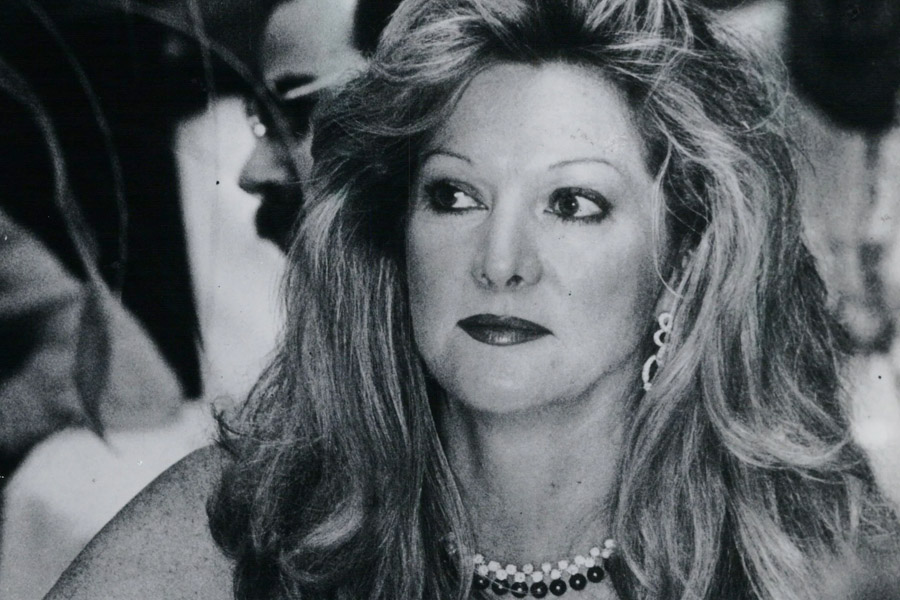
From Michigan roots to a life in the spotlight
I see Kathleen Duross as one of those people whose life never stayed in one lane for long. She began as Kathleen Roberta King, born on February 11, 1940, in Belding, Michigan, and her early years were shaped by a family life that started far from the grandeur that would later surround her. She spent part of her childhood in Port Elgin, Ontario, and later attended Cass Technical High School in Detroit, a school known for sharpening ambition and giving sharp edges to talent. That mix of small-town beginnings and big-city polish feels important. It explains a life that could cross borders, class lines, and social worlds without losing its balance.
Before the Ford name entered the picture, Kathleen was already building a personal identity. She worked as a model in the 1960s, and later accounts also describe her as a photographer and a nightclub owner in Detroit. I find that combination striking. Modeling is about being seen. Photography is about seeing. Nightclub ownership is about staging an atmosphere and holding a room together. Even early on, she seems to have understood how image, style, and presence can work like gears inside a larger machine.
The family behind the name
Kathleen Duross was never just a figure in a headline. She was a daughter, sister, wife, mother, grandmother, and great grandmother. Her parents were Charles King and Hazel King, née Irwin. Charles appears in public accounts as a factory worker, which gives her origin story a grounded, working class start. Hazel King stands beside him in the family record as the mother who helped shape the household. I think that matters because it keeps Kathleen’s life from being misread as a simple leap from nothing to wealth. The jump was real, but the roots were real too.
Her sister, Sharon Amluxen, remained part of the family story into Kathleen’s final years. Sharon’s public comments after Kathleen’s death showed how tightly the family was tied to the emotional center of her life. Sibling relationships can become quiet foundations, and in Kathleen’s case, Sharon seems to have been one of the most consistent family links across decades of change.
Kathleen’s first husband was David DuRoss. Public descriptions connect him with music, and their marriage gave Kathleen the surname that later became part of her public identity. Through that marriage came her children, Deborah DuRoss Guibord and Kimberly DuRoss. Those two daughters are central to the family story because they were present not only in Kathleen’s personal life, but also in the later struggle over her care and protection. Their role was not symbolic. It was active, emotional, and highly visible.
Later, Kathleen became Henry Ford II’s wife. That marriage moved her into one of the most famous industrial families in American history. Henry Ford II was the grandson of Henry Ford and the long time chief executive who helped carry the Ford legacy into a modern era. Kathleen became his third wife in 1980, and with that marriage her life entered a new register. The scale changed. The walls got higher. The rooms got larger. But the pressures got heavier too.
From Kathleen’s children came another layer of family: her grandchildren Chelsea Guibord Cox, Tara DuRoss, and David Guibord, plus her great granddaughter Quinn DuRoss Cox. These names matter because they show the family as a living chain rather than a static pedigree. The line did not stop with the Ford marriage. It continued into another generation, where Kathleen’s story became memory, inheritance, and family history all at once.
Marriage, money, and the Ford shadow
People know Kathleen best for her marriage to Henry Ford II, although that was only one chapter in her life. Kathleen faced a public estate dispute after Henry’s 1987 death after they married in 1980. This period shows something important about her. Ford was not her only home. After the man left, she negotiated the name’s meaning.
Financial facts are noticeable. She settled an estate issue in 1988, gaining a big annual income and the right to buy Henry’s English country residence, Turville Grange. The settlement put her in the elite echelons of American riches, but the meaning goes deeper. Kathleen never considered money merely money. Control, leverage, home, and continuity. Staying in the picture after the camera stopped was right.
Kathleen identified with her residences. Palm Beach, London, and Turville Grange were more than addresses. Her taste, discipline, and atmosphere were reflected in them. Later descriptions of her collection depict a woman devoted to English country home style, antiques, art, and historical things. Her interiors seem layered, like a wood, fabric, and light symphony. Their volume was low. They kept calm.
Career details and personal achievements
Kathleen Duross did not build a public career in the modern celebrity sense, but she did build a life of clear individual achievements. Her modeling work gave her visibility. Her photography gave her authorship. Her management of spaces, homes, and collections gave her a cultivated identity that stood on its own. She learned to develop her own prints, which tells me she valued the craft behind the image, not just the image itself.
One of her quieter achievements was the way she shaped her surroundings into a personal signature. A collection can be a diary. A room can be a sentence. Her estate, later auctioned after her death, showed a life arranged with care and intention. The objects were valuable, but more importantly they were expressive. They reflected a woman who understood that taste can be a language.
Her philanthropic legacy also endured. A fund bearing her name continued making major grants in later years, with a focus on medical research and vision related causes. That kind of legacy feels fitting. It turns private wealth into public benefit, and it gives her name a second life beyond family disputes and society coverage.
A timeline that runs from local to legendary
I see Kathleen’s life as a gradual expansion.
She was born in Michigan 1940.
Port Elgin and Detroit offered her borderland view and urban impetus as a child.
She modeled and learned photography in the 1960s.
After marrying Henry Ford II in 1980, she joined a prominent American dynasty.
Since Henry Ford II died in 1987, Kathleen has been a widow, heir, and public figure.
She secured her financial and property rights in a significant estate settlement in 1988.
Her daughters fought over her care in 2020, revealing how much the family still protected her.
Kathleen, 80, died in Pittsburgh in May 2020.
The sale of her collection in 2021 highlighted her art and domestic style life.
Her charity was still operational in 2024, proving her influence outlasted the headlines.
Recent attention and lasting public memory
Even after her death, Kathleen Duross continued to appear in news fragments, estate references, and family discussions. Her name kept resurfacing in connection with the Ford family, the auction of her belongings, and the charitable fund that carried her legacy forward. Social mentions tended to circle around three themes: wealth, family conflict, and taste. That is a narrow summary of a rich life, but it shows how public memory often works. It catches the brightest reflection and leaves the rest in shadow.
For me, Kathleen Duross stands out because she was both visible and elusive. She lived inside one of the most recognized family names in America, yet she maintained a strong personal shape. She was a daughter from Michigan, a model with poise, a mother with descendants who remained attached to her name, and a woman who turned her domestic world into something close to art.
FAQ
Who was Kathleen Duross?
Kathleen Duross was a model, photographer, and the third wife of Henry Ford II. She was also the mother of Deborah DuRoss Guibord and Kimberly DuRoss, and she became known for her style, family ties, and high profile place in the Ford family.
What were Kathleen Duross’s family relationships?
Her parents were Charles King and Hazel King. Her sister was Sharon Amluxen. Her first husband was David DuRoss. Her second husband was Henry Ford II. Her daughters were Deborah DuRoss Guibord and Kimberly DuRoss. Her grandchildren included Chelsea Guibord Cox, Tara DuRoss, and David Guibord, and her great granddaughter was Quinn DuRoss Cox.
What did Kathleen Duross do for a living?
She worked as a model in the 1960s, and later accounts also describe her as a photographer and a nightclub owner in Detroit. Her later life was also shaped by family wealth, property, and collecting.
Why is Kathleen Duross remembered?
She is remembered for her connection to the Ford dynasty, her personal style, her family role, and the wealth and property settlement that followed Henry Ford II’s death. She also left a lasting mark through a charitable fund and a notable collection of art and furnishings.
What happened after Henry Ford II died?
After his death in 1987, Kathleen became involved in an estate dispute that ended with a substantial settlement in 1988. That settlement gave her significant annual income and property rights, including rights connected to Turville Grange.
When did Kathleen Duross die?
She died on May 8, 2020, in Pittsburgh at the age of 80.