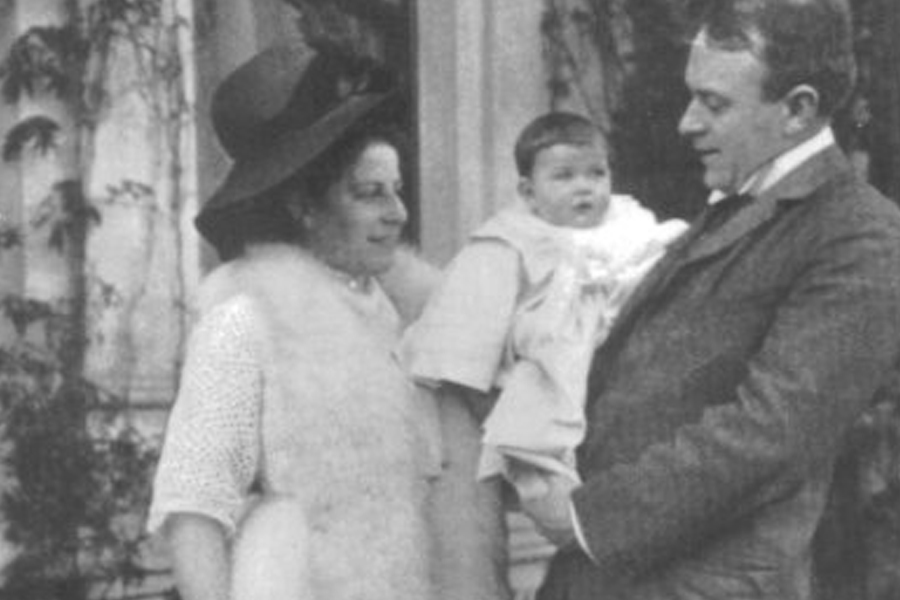
A woman shaped by fortune, grief, and duty
I see Helen Reilly Barbour as one of those people whose life moves like a strong river beneath a quiet surface. She was born on 10 April 1881 into the Barbour family, a household tied to wealth, industry, and public standing. Her father, John Doherty Barbour, belonged to the linen world that helped shape Northern Ireland’s economy. Her mother, Elizabeth Law Milne Barbour, came from the same broad social circle of influence and privilege. Helen grew up in a family where names carried weight, and where the future was often written before a child could speak.
She is best known today through her marriages and her family connections, especially her first marriage to Thomas Andrews, the celebrated shipbuilder and chief designer of the Titanic. Yet I think that framing is too small for her. Helen lived through high society, tragedy, remarriage, motherhood, and long memory. Her life was not a single spotlight. It was a lantern carried through several dark and bright rooms.
The Barbour household and early family ties
Family history mattered to Helen. The Barbours were unique industrialists. Her values were formed by their powerful linen dynasty. She breathed discipline, dignity, business, and public responsibility.
There, her father, John Doherty Barbour, was influential. He gave status and roots. Elizabeth Law Milne Barbour, Helen’s mother, anchored the family socially and individually. Helen’s brother, John Milne Barbour, became Northern Ireland’s Minister of Finance. That seems Helen comes from a home where family and civic life shared a table.
Family moves to Warwickshire and the Barbour house in Northern Ireland may have affected her early years. The big picture is evident however the specifics are mapped. Her family connected land, industry, and reputation like threads in a strong woven cloth.
Marriage to Thomas Andrews and a life transformed
On 24 June 1908, Helen married Thomas Andrews at Lambeg Parish Church. That marriage placed her beside one of the most important shipbuilders of his era. Thomas Andrews worked at Harland and Wolff, and his name is now inseparable from the story of the Titanic. For Helen, though, he was not a legend. He was her husband, her companion, and the father of her child.
Their marriage began with promise. They honeymooned in Switzerland and settled at Dunallan, 12 Windsor Avenue, Belfast. Their home was part domestic refuge, part social station. On 27 November 1910, their daughter Elizabeth Law Barbour Andrews was born. She was often called Elba, a name that sounds small and bright, like a spark carried through fog.
Then came April 1912. Thomas boarded the Titanic and never returned. Helen was left widowed at 31. That single event could have frozen her life into grief alone, but it did not. She preserved his memory, kept his letters and mementos, and remained tied to the public remembrance of his name. I think of that as an act of emotional architecture. She built a lasting frame around a shattered story.
A second marriage and a larger family circle
In 1917, Helen married Henry Pierson Harland. This was not just a personal turning point. It joined another branch of an already connected industrial world. Henry Harland became her second husband, and together they formed a new household that carried the weight of both continuity and change.
From that marriage came four children named in family records: Albert Henry Harland, Evelyn Patricia Harland, Louise Mary Margaret Harland, and Ethel Vera Helen Harland. These names matter because they show Helen not only as a widow and wife, but as a mother who extended the family line into a new generation.
Her daughter Evelyn Patricia Harland later married Swithun Richard Maxwell Goodbody, and from that line came grandchildren including Maureen Louise Goodbody and Coreen Anne Goodbody. Another daughter, Louise Mary Margaret Harland, also connected the family to the Goodbody branch through marriage. The family tree spreads outward like a great old oak, each branch carrying a different season.
Here is a simple family map of the relationships most often associated with Helen:
| Relationship | Name | Notes |
|---|---|---|
| Father | John Doherty Barbour | Linen industrialist |
| Mother | Elizabeth Law Milne Barbour | Family matriarch |
| Brother | John Milne Barbour | Politician and finance minister |
| First husband | Thomas Andrews | Shipbuilder, Titanic designer |
| Child with Thomas Andrews | Elizabeth Law Barbour Andrews | Also called Elba |
| Second husband | Henry Pierson Harland | Helen’s later husband |
| Children with Henry Harland | Albert, Evelyn, Louise, Ethel | Four children documented in family records |
| Grandchildren | Maureen Louise Goodbody, Coreen Anne Goodbody | Descendants through Evelyn |
Public life, memory, and social presence
Although Helen did not have a prominent job, she did not live quietly. She lived purposefully in civic and family life. At the 1914 opening of the North Down Cricket Club pavilion, she handed a silver key and a painting of Thomas Andrews. She addressed Thomas’s memorial events.
These events depict a woman who saw recollection as obligation, not decoration. She shaped Thomas Andrews’ legacy. She wasn’t on the brink of history. She assisted with framing.
Her finances reflected her history and surroundings. She was wealthy and inherited a lot after Thomas Andrews died. Financial security may have given her stability after a life of upheaval. However, money cannot explain endurance. Helen was rich in endurance, memory, and familial continuity.
Helen Reilly Barbour through the years
Helen’s life runs across several distinct eras. She was born in the late Victorian world, married at the edge of Edwardian confidence, became a widow in the shadow of Titanic, remarried during wartime, and lived long enough to see her family spread across a much larger social map. She died on 22 August 1966, aged 85.
That long span matters. She did not live a brief decorative life attached to famous men. She lived through change, loss, and repetition. She became a bridge between old industrial Ireland and the later century. In her story, I see the old language of family and duty, but also the quieter power of survival.
FAQ
Who was Helen Reilly Barbour?
Helen Reilly Barbour was the daughter of John Doherty Barbour and Elizabeth Law Milne Barbour. She is best known as the first wife of Thomas Andrews, the Titanic shipbuilder, and later the wife of Henry Pierson Harland.
Why is Helen Reilly Barbour remembered today?
She is remembered because of her connection to Thomas Andrews and the Titanic story, but also because of her large family network, her second marriage, and her role in preserving Thomas Andrews’s memory after his death.
How many children did Helen Reilly Barbour have?
She had one daughter with Thomas Andrews, Elizabeth Law Barbour Andrews, also known as Elba. With Henry Pierson Harland, she had four children: Albert Henry Harland, Evelyn Patricia Harland, Louise Mary Margaret Harland, and Ethel Vera Helen Harland.
Who were Helen Reilly Barbour’s grandchildren?
Among the grandchildren named in family records are Maureen Louise Goodbody and Coreen Anne Goodbody, both connected through her daughter Evelyn Patricia Harland.
Did Helen Reilly Barbour have a career?
I do not find evidence of a formal independent career in the records I reviewed. Her public life centered on family, social duties, memorial events, and the preservation of Thomas Andrews’s legacy.
What was Helen Reilly Barbour’s role in the Thomas Andrews story?
She was Thomas Andrews’s wife, widow, and the keeper of his memory. After his death, she retained his letters, photographs, and other personal items, helping preserve the human side of the Titanic tragedy.
When was Helen Reilly Barbour born and when did she die?
She was born on 10 April 1881 and died on 22 August 1966.